

Explanation of the Oratory
To begin, the term ‘oratory’ taken in its most basic and general sense, refers principally to an activity: most specifically, the art of speech-making. An orator is one who gives speeches, and ‘oratory’ names his craft. ‘Oratory’ thus has to do with art of speaking. But while the term most directly denotes the speech of professional orators, the most ordinary and natural context for the act of speaking is not the formal discourse but the shared conversation. Human speech does not begin in the monologue of the man before the crowd, but in the dialogue of friends. ‘Oratory’ can thus also be applied more broadly to art of conversation, the highest example of which is conversation with God. Thus, a higher sense of the term emerges: ‘oratory’ has not only to do with the art of speech-making, but with the art of conversation, which culminates in the act of prayer. Hence the Latin word for speaking is also the word for prayer: orare. ‘Oratory,’ then, can also refer to prayer.
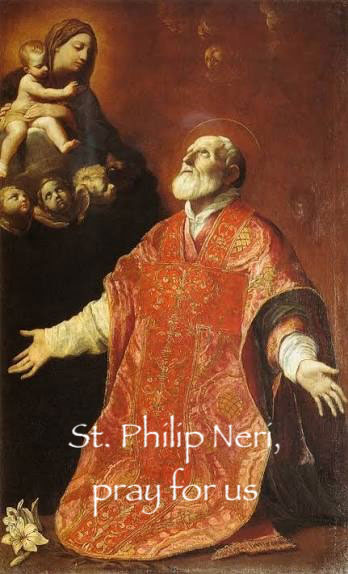
It is for this reason that the term acquired a new significance within a Christian context. In addition to signifying the art of speech, it also came to signify a place set aside for the activity of prayer. This is the second primary meaning of the term: as a noun, it refers to a chapel or a place set aside for prayer. Thus, when St. Philip Neri began gathering young men together in his residence for sacred conversation and prayer, it was natural for the group to begin referring both to the activity and to the place as ‘the Oratory.’
II. The Event of the Oratory
Philip’s priestly ministry centered around events of communal prayer. These events were initially informal in nature: after singing some hymns, a passage of scripture would be read, followed by interspersed periods of silence and impromptu reflection, which each participant would offer as the Spirit moved him. The early followers of St. Philip eventually named this mode of prayer “familiar discourse on the Word,” and they considered it the essential activity of their community.
The event had an immense impact on the city of Rome, which was in serious need of spiritual reform at the time. Eventually, the number of participants swelled such that the meetings had to be moved from Philip’s rooms to the adjoining Church. With greater numbers also came the need for increased formality, but the essential shape of the event remained the same: music, prayer, silence and discourse on the Word. The name given to this event, as well as to its place, was simply ‘Oratory.’ It was a time of sacred conversation wherein heart spoke to heart and participants were drawn into an intimate familiarity with Jesus Christ, the Word of the Father.
Eventually, a core of regular participants decided to pursue the priesthood and began living a common life together under the spiritual fatherhood of Philip. This group, dedicated to the life of fraternal charity and to the ministry, would eventually be formally established by the Church, taking the same name that was given to the event of prayer that first drew them together: Oratory.
Thus, the term ‘Oratory’ acquired yet another new level of meaning. When we speak of the Oratory, therefore, we have this two-fold sense in mind: it is a regular event of prayer and a community of priests and lay people developing around this event.
III. The Oratory in Lowertown St. Paul
We now consider what St. Philip’s Oratory might look like here in Saint Paul. While Oratorian communities are confederated with each other around the world, each is independent in its governance. Therefore, each one takes on a different look and shape according to its unique situation. What do we envision here?
First, of course, we hope to build-up a community of priests (and possibly brothers) who enjoy a common life of fellowship and regular prayer. Fr. Hagan and I have been pursuing this life for 10 years now, and we have been especially blessed to have Fr. Kyle Etzel with us since the summer of 2022 when he was a deacon. We also have a brother in formation for eventual Oratorian priestly ministry, Kai Olson, who has been with us since the late summer of 2023. He has been receiving human, spiritual, and intellectual formation and we anticipate sending him for theological formation at the Saint Paul Seminary soon. Our long-term goal is to have a household of five to eight priests and/or brothers, each contributing in various ways to our shared Oratorian work in St. Paul, in addition to his own personal work. This community, once established, would enjoy stability of place so that it can plan not only in terms of decades but generations.
Beyond this, and secondly, we would like to build up a culture of common prayer between priests and laity, both through a special care for the Liturgy and sacred music, and through regular prayer events inspired by the evening Oratories of St. Philip. Already such events have begun to take shape, involving some combination of sacred music, silent contemplation and scriptural reflection. Our long-term vision here would include regular prayer meetings of a committed community of lay collaborators.
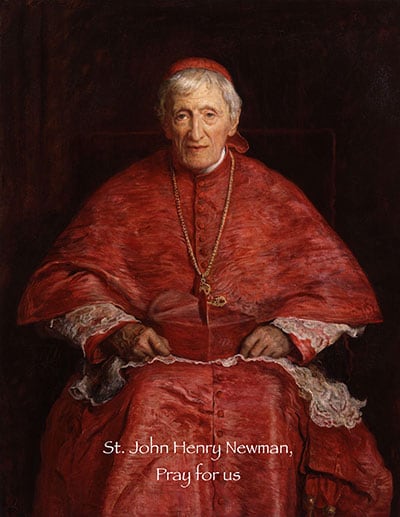
Thirdly, as a place of conversation, the Oratory is well suited for in-depth spiritual and theological formation for the faithful. St. John Henry Newman expressed his hope that the Oratory could serve the vital task of educating the lay Catholic for the challenges of the modern age, challenges which have by no means diminished in our own times. Our two regular small-groups, the monthly Men’s John Henry Newman Reading Group and the bi-monthly and co-ed Communio Study Circle are examples of a fruitful dedication to serious intellectual engagement with the theological and philosophical tradition in the light of contemporary questions and life. Another example is our course in Christian doctrine, Introduction to [Catholic] Christianity, which serves both as an initiation for those interested in joining the Church through OCIA and as a deeper formation for those who want to continue to pursue an integrated understanding of their faith.
Finally, as a fruit of common prayer and formation, we hope to build a community that is available for apostolic outreach to our neighborhood, in terms of charitable work and evangelical witness. We know that our neighborhood manifests a great deal of need, not only in material but also spiritual poverty. In the face of such need, the Church is called to manifest the saving love of Jesus Christ. We hope that St. Philip’s Oratory can be special place for the realization of that universal mission.
IV. The Oratory: Why Here? Why Now?
Our interest in the project of the Oratory is not unconnected to our estimation of the needs and unique opportunities of our time and place.
As Christians of the twenty-first century, we need to be clear-eyed about the challenges we face: here we have in mind not only commonly observed sociological statistics about the decline of religion but the deeper cultural currents that underlie them. A cold, arid wind has been blowing for a long time within the intellectual culture of the West, and as its intensity has increased in the past half-century, people have found it harder and harder to acknowledge the invisible along with the visible, the spiritual along with the material, faith along with reason. The old supports which culture once provided to Christian faith have been systematically removed, and the Christian accordingly finds himself in an ever more isolated and embattled position. While we can certainly hope and pray for an act of God (history is full of surprises), we should not expect any sudden reversal to these dynamics. Challenging times are ahead for the Church.
This is hardly a time for the Church to circle her wagons: indeed, energetic apostolic outreach is more than ever the order of the day. But it is a time wherein Christians need to band together in more intentional bonds of community and formation. While this has always been a necessary aspect of Christian life, it is even more vital today if our faith is to survive against the headwinds that confront us. Minimal observance will not be enough. This goes not only for the lay faithful but also for priests: in our judgement, the days in which priests can be expected to survive in ministerial isolation are numbered.
The Twin Cities have witnessed multiple examples of the power of intentional community (among both lay and priestly circles) to support and build up the faithful for apostolic work. Such movements go a long way toward explaining the distinctive vitality of our local Church. It therefore seems appropriate to us that this archdiocese enjoy the unique gifts that an Oratory can provide, both in its special manifestation of communal life and in its historic strengths in the areas of liturgical, spiritual, and intellectual formation. Our local Church manifests a special hunger for this kind of intensive formation, and our hope is that the Oratory can rise to meet that need in a special way, as it also provides a special opportunity to strengthen the bonds of communal life, which are so essential for the Church’s mission in our times.
Our desire to form an Oratory is thus correlated with an estimation of the needs and opportunities of our time and place. Our times present great challenges, but our place manifests great potential and great hunger on which to capitalize. Please pray for us and for this community: that God’s will might be done in us, that we might be receptive to the movements of the Holy Spirit, and that we might receive the charism we need for the work ahead.
Fr. Bryce Evans
Moderator of the Community-in-Formation at St. Mary’s in Lowertown
St. Philip Neri, pray for us.
St. John Henry Newman, pray for us.